The story of the FAW Premier Cup

Since the FAW excluded clubs playing in the English leagues which included six Welsh Clubs at the time from playing in the Welsh Cup in 1996, a new competition was announced where the best teams in Wales could compete. This is where the FAW Premier Cup came in. The competition was first played in 1997 and last played in 2008 but during the 11 years the competition was played it gave teams from the Welsh Premier League to test themselves against the Football League teams at the time in Cardiff City, Swansea City and Wrexham.


The original format of incorporated the three that were playing in the Football league along with Merthyr Tydfil and the four Welsh Premier League clubs. Until the 2001-02 season Merthyr Tydfil had a guaranteed as Newport County and Colwyn Bay were not invited to take part. From then on wards, the highest placed of the three were invited, subsequently Colwyn Bay never qualified for the competition. From 2004-05 on wards, the competition was expanded to 16 clubs, the top 10 from the Welsh Premier League, joined by the two best-placed of the three teams from Newport County, Merthyr Tydfil or Colwyn Bay, but as mentioned before, those two teams were always Newport County and Merthyr Tydfil, the winners of the Welsh Cup plus Cardiff City, Swansea City and Wrexham.


The competition also offered a very healthy prize fund. A share of the TV coverage matches as some matches were shown live on BBC Wales, the share was an even split between both clubs. The losing semi-finalists each received £25,000 , with the losing finalists receiving £50,000 and the winners netting themselves £100,000. The senior clubs in the competition were accused of taking it lightly especially Cardiff City after the arrival of ambitious owner Sam Hammam, Cardiff enjoyed success in the Football League but only won the FAW Premier Cup once after beating arch-rivals Swansea City in front of 6,629 fans in the 2002 final at Ninian Park. Wrexham were the most successful team in the competition’s short history winning it five times while appearing in the final eight times.


Four Welsh Premier League teams appeared in the final which would’ve been somewhat of a financial jackpot for those clubs. Barry Town won the competition in 1999 overcoming Wrexham in the final at The Racecourse Ground. Rhyl lost to Wrexham in the 2004 final, while The New Saints overcame Newport County in 2007 and Llanelli lost to Newport in 2008. The competition saw it’s demise after BBC Wales announced they were withdrawing their sponsorship of the competition, with no financial backing the competition was cancelled after the 2008 edition. In the 2011-12 season the FAW announced that the six exiled clubs would again be invited to participate in the Welsh Cup, Merthyr Town, Newport County and Wrexham all accepted while Cardiff City, Swansea City and Colwyn Bay all rejected the invitation. However the three clubs that initially accepted their invitation all pulled out as UEFA announced that they would refuse entry into the Europa League to any club in the English leagues system if they did win the Welsh Cup.


During it’s 11 years of existence the FAW Premier Cup brought some entertainment to the clubs of Wales, and gave the clubs of the Welsh Premier League the chance to play against clubs the size of Cardiff and Swansea albeit they did play against weakened sides. Having started off in a group format, the competition changed in 2004 to a knockout style Cup which gave the smaller clubs more of a chance in a one-off game than having to go through a group then a two-legged tie. As a fan, it was a change to see the likes of The New Saints, Llanelli, Bangor and so on come up against clubs like Cardiff and Swansea in competitive games. The significant backing the competition received from BBC Wales showed it could’ve grown but sadly it wasn’t to be and it reached an unfortunate end.
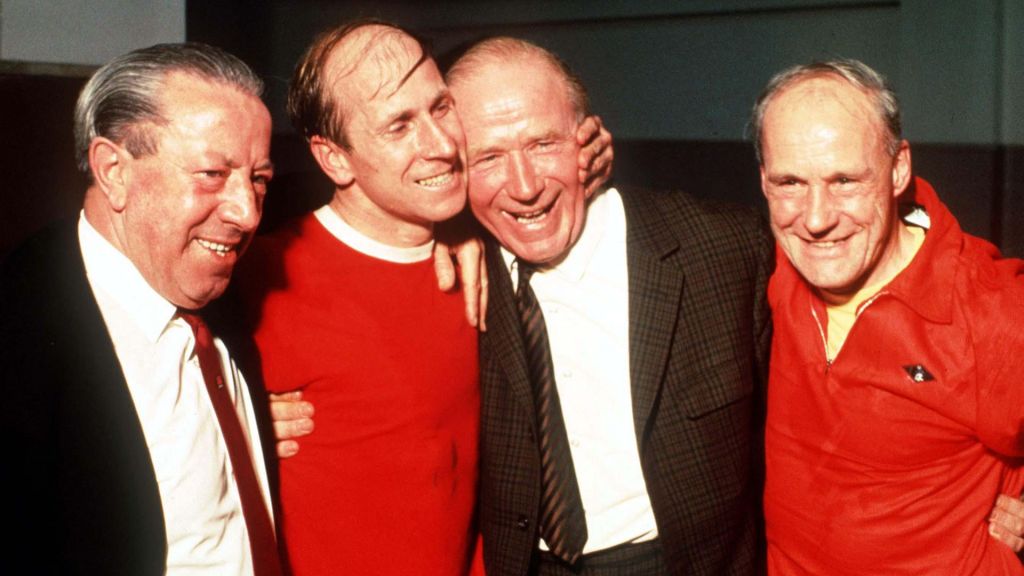
Jimmy Murphy – Y dyn o Rhondda aeth i frig y byd pêl-droed gan Jordan Thomas.

Nid oes llawer o bobl wedi clywed am Jimmy Murphy, i ddweud y gwir mi oeddwn i yn un o’r bobl yna cyn sgwrs mewn tafarn lleol, ond oedd y stori o’r dyn arwrol yn un oedd wedi fy rhyfeddu a yn fy marn i dylid pob cefnogwr pêl-droed wedi clywed am ei stori.
Ganwyd Jimmy Murphy yn ardal y Rhondda ar Awst yr 8fed, 1910 ac yn 1928 fe arwyddodd gyda West Bromwich Albion fel chwaraewr pêl-droed proffesiynol pan yn 17 mlwydd oed. Chwaraeodd drost 200 o gemau i’r clwb ag fe gafodd ei gap gyntaf i Gymru pumtheg o weithiau. Nid oedd yn un am daro y penawdau yn ei yrfa proffesiynol ond yn ei yrfa fel hyfforddwr a rheolwr ydi’r rheswm pan rwyf yn credu dylia ei hanes cael ei adrodd unwaith eto.


Yng nghanol yr Ail Ryfel Byd, cafodd araith gan Murphy i filwyr am bêl-droed ei fynychu gan Sir Matt Busby, cafodd yr araith argraff ar Busby ac pan gafodd Busby ei benodi fel rheolwr Manchester United, fe gafodd Murphy ei benodi fel hyfforddwr yn 1946. Yn 1955 fe caofdd Murphy ei benodi fel rheolwr cynorthwyol dros Manchester United ar ol iddo arwain y clwb i’w trydydd Cwpan Ieuenctid F.A. yn olynnol. Cyfrioldeb Murphy oedd hyfforddi y chwaraewyr ifanc yn y clwb, fe aeth y chwaraewyr o dan oruchwyliaeth Murphy ymlaen i’w cael ei adnabod fel y ‘Busby Babes’. Cyn hyn fe roedd y timau mawr yn prynnu chwaraewyr yn lle ei datblygu, ond fe roedd Busby yn ymddired yn system ieuenctid y clwb. Tra yn ei swydd fel rheolwr cynorthwyol Manchester United, penodwyd Murphy yn reolwr dros Gymru yn 1956 gyda’r targed o gyrraedd Cwpan y Byd yn 1958. Gyda Manchester United yn ennill y gynghrair yn 1956-57, fe aeth Murphy ymlaen gyda Cymru i drio ennill lle yng Nghwpan y Byd. Cafodd Gymru eu rhoi mewn grŵp gystadleuol gyda Dwyrain Yr Almaen ac Siecoslofacia, gorffennodd Cymru yn ail yn y grŵp ac fe oedd hi’n edrych fel bod eu gobeithio i gyrraedd Cwpan y Byd wedi dod i ben.


Yn lwcus i Gymru, fe oedd Israel wedi cyrraedd y rownd ddiwethaf o’r gemau cymwys gyda pob un o ei gwrthwynebwyr yn gwrthod i’w chwarae oherwydd amryw o resymau gwleidyddol. Dywedodd FIFA na ddylid unryw wlad gyrraedd y gystadleuaeth oni bai am Sweden (yr wlad ble oedd y gystadleuaeth yn cael ei chynnal) ac Gorllewin yr Almaen (yr enillwyr o 1954) heb chwarae gêm. Felly fe gafodd Gwlad Belg y cyfle i chwarae Israel ond eto fe wrthododd nhw y cyfle ag fe ddisgynnodd y cyfle i Gymru mewn gêm dwy gymal i weld pwy oedd yn mynd i Gwpan y Byd 1958. Fe ennillodd Cymru y ddwy gêm o ddwy gol i ddim ond yr ail gêm fydd yr un fwyaf adnabyddus yng nghyrfa Jimmy Murphy. Fe chwaraeodd Cymru yn erbyn Israel ar Chwefror 5ed, 1958, ar yr un noson fe oedd Manchester United yn chwarae yn rownd go-gyn derfynol yng Nghwpan Ewrop draw yn Red Star Belgrade. Fe benderfynnodd Murphy cymryd gofal dros gêm Cymru, tra ar y ffordd yn ôl o Belgrade, fe stopiodd awyren a oedd yn cario carfan Manchester United yn Munich. Tra yn trio ail-gychwyn fe gafodd yr awyren ddamwain erchyll lle bu farw 23 o bobl a oedd yn cynnwys 8 chwaraewr Manchester United a tri aelod o staff, cafodd y ddamwain ei adnabod fel ‘Trychineb Awyr Munich’. Fe aeth Murphy i Munich ychydig ddyddiau ar ôl y trychineb i geisio ddod i delerau gyda be ddigwyddodd i’w ffrindiau.
Gyda Sir Matt Busby yn gwella o’i anafiadau yn yr ysbyty, fe gymerodd Murphy gofal o garfan Manchester United am weddill y tymor, hyd yn oed gyda y carfan wedi cael ei ddinistrio ar ôl be ddigwyddodd yn Munich, fe arweiniodd Murphy y clwb i rownd derfynol Cwpan F.A. yn erbyn Bolton Wanderers, yn anffodus colli i ddwy gôl gan Nat Lofthouse oedd ei hanes ond fe roedd y gamp o gyrraedd y rownd derfynol yn un arwrol o ystyried yr obligiadau.

Ar ôl iddo gymeryd gofal o Manchester United am weddill y tymor, fe aeth Murphy ymlaen i Sweden i arwain ei wlad yng Nghwpan y Byd. Yn y gystadleuaeth, fe gafodd Cymru ei roi mewn grŵp hefo Hwngari, Mexico a Sweden, gyda tair gêm gyfartal, fe aeth Cymru fewn i gêm ail gyfle gyda Hwngari i weld pwy oedd yn mynd i’r rownd nesaf i chwarae yn erbyn Brasil. Fe ennillodd Cymru y gêm o ddwy gôl i un ar ol i Ivor Allchurch a Terry Medwin rwydo iddynt. Fe aeth Cymru o dan oruchwyliaeth Murphy i’r rownd go-gyn derfynol, yn anffodus fe gollwyd y gêm un i ddim ar ôl i Pele rwydo i Brasil, fe aeth Brasil ymlaen i ennill Cwpan y Byd ar ôl iddynt drechu Cymru.


Ar ôl i Sir Matt Busby wella o’i anafiadau o’r ddamwain yn Munich, fe aeth Murphy yn ôl i’w swydd fel rheolwr cynorthwyol tra dal yn rheolwr ar Gymru. Fe wrthododd gynnigon gan rhai o’r gewri y byd pêl-droed (Brasil, Juventus ac Arsenal) i ddod yn reolwr arnynt. Roedd Murphy wrth ei fodd yn gweithio yn y cefndir ag yn datblygu yr ieuenctid ac yn helpu nhw ddod yn chwaraewyr i’r tîm cyntaf. Nid oedd gan Murphy obeithion o ddod y prif ddyn yn y ‘dugout’. Fe arosodd Murphy yn reolwr ar Gymru tan 1964, fe fethodd i arwain Cymru i Gwpan y Byd yn 1962 ond hyd heddiw, Murphy yw’r unig ddyn i reoli Cymru yng Nghwpan y Byd . Yn 1968, ddeg mlynedd ar ôl y trychineb yn Munich, fe gyflawnodd Murphy a Busby eu breuddwyd o ennill Cwpan Ewrop ar iddynt drechu Benfica yn y rownd derfynol, roedd nifer o bobl yn credu buasai y clwb wedi ennill y tlws flynyddoedd ynghynt os nad oedd ei carfan wedi cael ei dinistrio a wedi colli chwaraewyr fel Duncan Edwards yn Munich. Fe arosodd Murphy fel rheolwr cynorthwyol yn Manchester United yn 1971.


Yn 1973 fe ddaeth Murphy yn sgowt i Manchester United tra oedd Tommy Docherty yn reolwr ar y clwb, o annogaeth gan Murphy fe arwyddodd y clwb Steve Coppell ac Gordon Hill, rhyngddynt fe chwaraeodd y ddau dros 400 o gemau i’r clwb. Bu farw Jimmy Murphy yn Tachwedd, 1989, fel anrhydedd iddo fe gomisynwyd tlws ”Jimmy Murphy Young Player of the Year” oherwydd y gwaith iddo wneud gyda y timau ieuenctid tra yn Manchester United, tlws sydd wedi cael ei ennill gan chwaraewyr sydd yn cynnwys Ryan Giggs, Paul Scholes, Marcus Rashford ac Mason Greenwood. Yn Mawrth, 2009 fe gafodd plac glas ei osod ar y tŷ lle fagwyd Murphy yn Treharne Street, Pentre. Fe gafodd ei bortreadu gan Philip Madoc yn y ffilm ”Best” yn 2000 ag gan David Tennant yn y ffilm BBC ”United” yn 2011, ffilm sydd yn canolbwyntio ar y ”Busby Babes” ac y trychineb awyr yn Munich. Hyd heddiw, mae Jimmy Murphy yn cael ei gofio am yn Manchester United ac yn Gymru ond nid oes llawer o bobl yn gwybod ei stori anhygoel, y flwyddyn a gafodd yn 1958 ac ei bwysigrwydd yn hanes pêl-droed Cymru a Manchester United.

From Europa League to the High Court in 12 months. The Neath F.C. story

Following a merger between Neath and Skewen Athletic, Neath Athletic A.F.C were created in 2005. Skewen agreed to the merger in an attempt to mount a better challenge to the Welsh Football League Division One. They started off at the old ground of Neath FC, Llandarcy Park. The original Neath FC were founded in 1922 as National Oil Refineries F.C., as a works team for the local new oil refinery. In 1955 they changed their name to BP Llandarcy F.C following the British Petroleum Company’s acquisition of the refinery.
In their first season following the merger they finished second to Goytre United in what was a successful season. Goytre declined the offer to step-up as champions to the Welsh Premier League meaning Neath Athletic could gain promotion to the top tier in their first season. Unfortunately for the club Llandarcy Park did not meet the required criteria of the top tier, and Neath were refused entry. 2006-07 proved to be a great season for Neath as they won the Welsh Football Division One with a fantastic tally of 92 points, and with improvements to Llandarcy Park, Neath Athletic achieved the dream of being promoted to Wales’ top tier. In the 2007-08 season, their first in the Welsh Premier League, their intentions were clear early on as they signed Clayton Blackmore who was in the twilight of his career but still a marquee signing for the club and they finished a respectful seventh . The summer of 2008 proved all change for Neath Athletic as Neath RFC agreed to let the football club use their home ground of The Gnoll and suddenly the club had one of the best stadiums in the Welsh Premier League.


With a move to a new home finalized the club renamed itself to Neath F.C.. They played their first match at The Gnoll against Swansea City, following the game the two clubs announced a partnership that would enable Swansea to send players to Neath to gain experience. The first players to benefit from the partnership were Kyle Graves, Dion Chambers and Kerry Morgan. Two seasons of stability followed as the club found it’s feet in the top tier. In 2010 the club made it’s biggest announcement to date as they made their intentions to become a full time club in hope of challenging the likes of The New Saints, Rhyl and Llanelli for the domestic honours in Wales
The 13th of July 2010 was a day where Neath F.C., were taken serious in their pursuit of the Welsh Premier League title as they announced the marquee signings of Kristian O’Leary and Lee Trundle, two players who had seen plenty of success with neighbours Swansea City. Signing Trundle was a massive statement by Neath as he was playing for Bristol City the in the preceding season. Considering the popular striker had turned down moves to Tranmere Rovers, Yeovil Town and Swindon Town, a few eyebrows were raised with his decision to play his football in the WPL. It was location not financial gain that saw Trundle make his decision as in his words it would be a chance for the Swansea City fans to come over and support him again. In their first season as a full-time club Neath finished in third place, something of a minimum expectation due the position carrying a European qualification spot. Following a complete overhaul of the league system, Neath found themselves in a play-off game against Prestatyn Town in front of a record WPL crowd of a 1,000 at the Gnoll. Neath won the game 3-2 and had implemented themselves as one of the big boys in Welsh football.


Despite the success on the pitch, the problems off it could not be ignored as debts continued to build as the club were paying inflated wages to attract their players. The signing of former Swansea and Port Talbot defender Matthew Rees only added to the inflation of wages. Company accounts showed that the club were £95,000 in debt, a clearly unsustainable situation for a club of their size. However there was excitement as for their win over Prestatyn, they were rewarded with a draw against Norwegian side Aalesunds FK in the first qualifying round of the Europa League. Going into the 2011/12 season the club strengthened the squad with 12 new additions including Maltese international Udo Nwoko and their was belief the club could repeat the successes of the previous campaign
As the business of the chairman went into administration, players and staff went unpaid, the management duo of Terry Boyle and Peter Nicholas left the club, Kristian O’Leary was installed as player-manager. On the pitch the club finished third in the league and hopes of another European adventure were alive but those dreams were quashed after the club failed in their attempts to gain licenses to compete in the Welsh Premier League and in UEFA sanctioned competitions. This was because of them failing to adhere to FAW regulations on club finances, after a failed appeal the club were relegated back to the second tier. The relegation proved fateful to Neath as a mere month later they found themselves wound up in the High Court, Lee Trundle went back to the Football League with Preston North End and all the players left.

This proved to be the end for Neath F.C., they certainly made their mark in the short time they existed but left with a black cloud lingering over them. The fans had their memories of seeing Football League quality taking to The Gnoll but you had to pay to get Football League quality and sadly Neath didn’t have the means to do that.

The curious case of Borough United

   by Jordan Thomas

Not many people in the world have heard of Borough United, to be honest not many people from Wales have heard of Borough United. The club was formed in 1952 and by 1969 the club had disappeared but in those 17 years the club made a name for itself on a domestic level and European level. The club was a merger two neighbouring teams who were struggling financially. Llandudno Junction and Conwy Borough formed to create Borough United and the club played at Junction’s Nant y Coed ground, their first few season saw little success as the club established themselves in the Welsh League North. In 1958-59 the club won their first league title which was exactly 10 years after Junction’s previous title. During their run to the title they scored 146 goals and beat local neighbours Llandudno FC to the title which added to the sweet taste of success. The next few seasons saw near misses but in the 1962-63 season things came very good for the club. As a horrific winter saw the league extended into the summer months, an avalanche of goals came through brothers Keith and Mike Pritchard and former Oldham striker Gerry Duffy. The club won the league title ahead of Holyhead Town and Colwyn Bay and picked up three trophies along the way.


The club won the Cookson Cup and the North Wales Coast Challenge Cup but it was the Welsh Cup that saw the club make waves on an international stage. It all started with a win over coastal rivals Rhyl, next they beat cup holders Bangor City and in the semi-final they beat Hereford United by a goal to nil thanks to Mike Pritchard. The two-legged final saw Borough United come up against Football league opposition in Newport County, in front of 3,500 fans, Borough came back from 1-0 down to win 2-1 thanks to goals from Billy Russell and Joe Bebb. Three days later at Somerton Park, a string of saves from Dave Walker saw a goalless draw and Borough were Welsh Cup champions. The four trophies they won were paraded through Conwy and Llandudno Junction but most of the summer was spent fund-raising for an European adventure in the European Cup-Winners’ Cup. The first round draw was a kind one as the club were paired with Sliema Wanderers of Malta, the draw might’ve been kind but the journey was less straightforward. The journey to the Med took 31 hours because of engine troubles on the plane and they took to the pitch a mere four hours after touching down in Malta. The match took place at the National Stadium in front of 15,000 spectators and Borough did well to hold the Maltese side to a 0-0 on an unfamiliar sandy surface. The second leg in Wales was played at Wrexham in front of 17,613 fans. As Borough struggled on the sand in the first leg, Sliema found the grass a a problem and a goal in each half saw Borough go through


In December 1963, Borough were drawn against Czech cup winners Slovan Bratislava who had reached the previous season’s quarter finals and fielded five internationals. Bizarrely, the crowd went down in numbers compared to the game against Sliema in the first round but the 10,000 that did turn up saw a fiercely contested game, Slovan Bratislava scored early in the second half to take a 1-0 lead into the second leg. Four days later Borough traveled to icy and snowy conditions which heavily favored the home side and a 3-0 victory for Bratislava saw Borough depart the competition 4-0 on aggregate. The first four months of the 63-64 season were dominated by European competition, but United enjoyed a good season finishing third behind Holyhead and Colwyn Bay but top scoring with 134 goals from 32 matches. They relinquished the Welsh Cup in a 5-1 fifth round defeat to Chester but retained the North Wales Challenge after a 2-0 victory over Holywell. The 1964/65 season saw Borough United finish runners up in the league behind Colwyn Bay and losing again to Chester in the Welsh Cup in a twice replayed quarter final, the club also lost 4-0 to Ellesmere Port in the FA Cup as well.
1965/66 saw the club finish trophy less and the same followed in 1966/67. 1967 was a momentous year for Borough but in the wrong way as the Nant y Coed owners evicted the club from the ground leaving them without a ground of Welsh League standard. Relocating to Conwy was ruled unfeasible, and the FAW refused an application by the club to join the Chesire League. In July 1967 the club resigned from the Welsh League North and soldiered on for two season in the Vale of Conwy League. Borough United folded in 1969. The club’s sudden demise is made more poignant that Nant y Coed remained intact but decaying for over a quarter of the century. Though the club only existed for 17 years their short history won’t be forgotten by the people of Conwy and Llandudno Junction.

Introduction

This blog will be a history of all things Welsh football, it will include everything from Cardiff City’s FA Cup win in 1927 to the history of clubs that are no longer with us. From international football to domestic football, my intention is to give anyone who reads this a history of how the beautiful games has had it’s impact in Wales.

Anyone who’d like to share any post of mine, please get in touch and we’ll see what we can do.

Design a site like this with WordPress.com
Get started